Ottawa Hills, Ohio
Furnace Repair Ottawa Hills OH
Ottawa Hills is built around older, architecturally distinctive homes, many with large footprints, multiple zones and mechanical systems that have been upgraded piecemeal over decades. Furnace problems in these houses are often less about a single bad part and more about how a modern furnace interacts with original ductwork and controls.
Call now for a FREE QUOTE and for service availability. Please have your 5-digit ZIP code ready.
- Residential furnace repair only
- 24/7 service availability
- Availability confirmed by ZIP code
Furnaces in Ottawa Hills homes
Large older homes frequently run two furnaces or a zoned system with dampers. When only part of the house loses heat, the issue may be a zone control, damper motor or thermostat rather than the furnace itself.
Original ductwork in these homes was often designed for a different heating approach, so static pressure can be high. High static pressure shortens blower life and contributes to overheating and short cycling.
Smart and multi-stage thermostats are common here. Wiring and staging configuration can cause behavior that looks like a furnace fault but traces back to the control.
Typical equipment here: Large older homes, zoned systems, dual furnaces and original ductwork paired with modern equipment.
Larger older homes and multiple heating zones
Ottawa Hills has an unusual concentration of large, older, architecturally substantial homes, and they are heated accordingly. It is common to find two furnaces in one house — one serving the main and upper floors, another handling an addition, a third floor or a wing — or a single furnace paired with a zone panel and several thermostats. Diagnosing a complaint here starts with establishing which equipment serves the room that is cold, because a homeowner reporting no heat upstairs may have a perfectly healthy furnace in the basement.
Dual-furnace setups also mean two of everything that can fail: two filters, two condensate paths where applicable, two flues, two sets of controls. A maintenance habit that covers one unit and misses the other is a frequent contributor to mid-winter failures.
Static pressure, large duct systems and smart controls
Large homes mean long trunk lines, many branches and a lot of opportunity for static pressure to climb beyond what the blower was selected for. High static pressure is quietly destructive: it reduces airflow, raises temperature rise, shortens blower and heat exchanger life and causes intermittent limit trips that look random from the thermostat. It is measurable, and measuring it is how an intermittent complaint stops being a mystery.
Smart and zoned controls are widespread here, and they add a layer between the homeowner and the furnace. A zone damper that fails closed, a zone panel that loses its transformer, or a learning thermostat running a recovery ramp can all produce symptoms indistinguishable from equipment failure. Reading what the control system is commanding, and confirming the furnace responds correctly, comes before any part is replaced.
Safe checks before you call
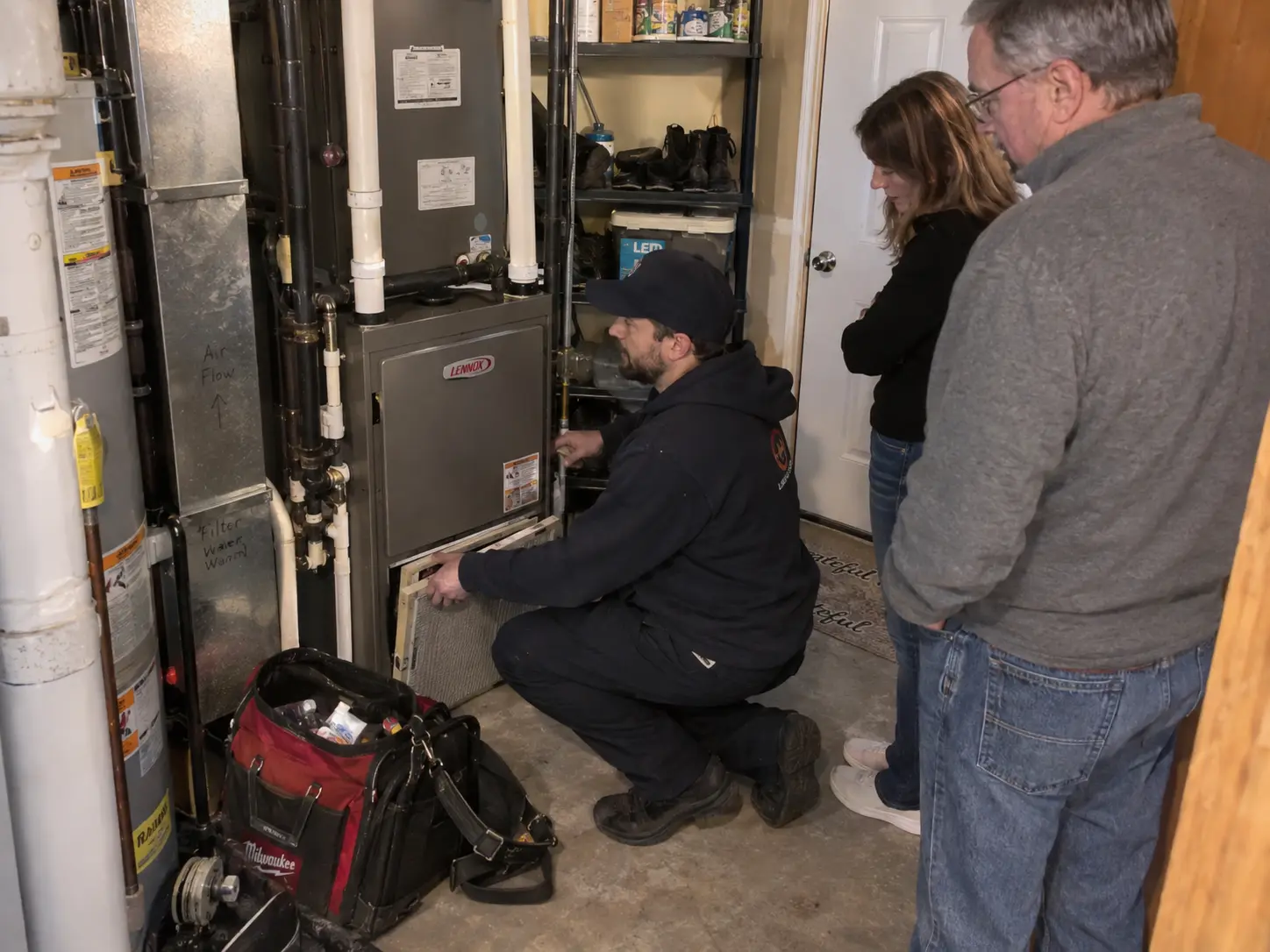
Confirm the thermostat is set to HEAT and several degrees above room temperature. Check the furnace service switch and the breaker. Pull the filter and replace it if it is loaded. Make sure supply registers and return grilles are open. Note any flashing diagnostic light on the furnace. Stop there — anything involving gas components or line-voltage wiring belongs to a technician.
Safety first: gas odor and carbon monoxide
If you smell natural gas or rotten eggs
- Leave the home immediately.
- Do not operate electrical switches, appliances or garage door openers.
- From a safe location away from the house, contact your gas utility or emergency services.
If a carbon monoxide alarm activates
- Leave the home.
- Follow the alarm manufacturer's instructions and the direction of emergency authorities.
- Do not re-enter until you are told it is safe.
Never attempt gas piping, gas valve or line-voltage repairs yourself.
Furnace repair questions from Ottawa Hills homeowners
Only half my house is cold. Is that the furnace?
Possibly not. In a zoned or two-furnace home, a single cold area points toward that zone's thermostat, damper, or the furnace serving it. Diagnosis starts with identifying which equipment serves the cold area.
My smart thermostat says heating but nothing happens. What should I check?
Confirm the thermostat is set to HEAT and several degrees above room temperature, check the furnace service switch and the breaker, and look for a blinking diagnostic light on the furnace. Beyond that, wiring and staging checks are technician-level work.
Do you work on two-furnace homes?
Yes, on the residential side. Both systems can be evaluated during the same visit when needed.
Keep reading
Helpful pages
Related guide
Furnace Won't Turn On? A Toledo Homeowner Troubleshooting GuideNothing at all when the thermostat calls for heat. Work through these safe checks in order before you pick up the phone.
Furnace trouble in Ottawa Hills?
Call 419-517-4547 and describe what the furnace is doing. Service availability in Ottawa Hills is confirmed by your 5-digit ZIP code.
Call now for a FREE QUOTE and for service availability. Please have your 5-digit ZIP code ready.